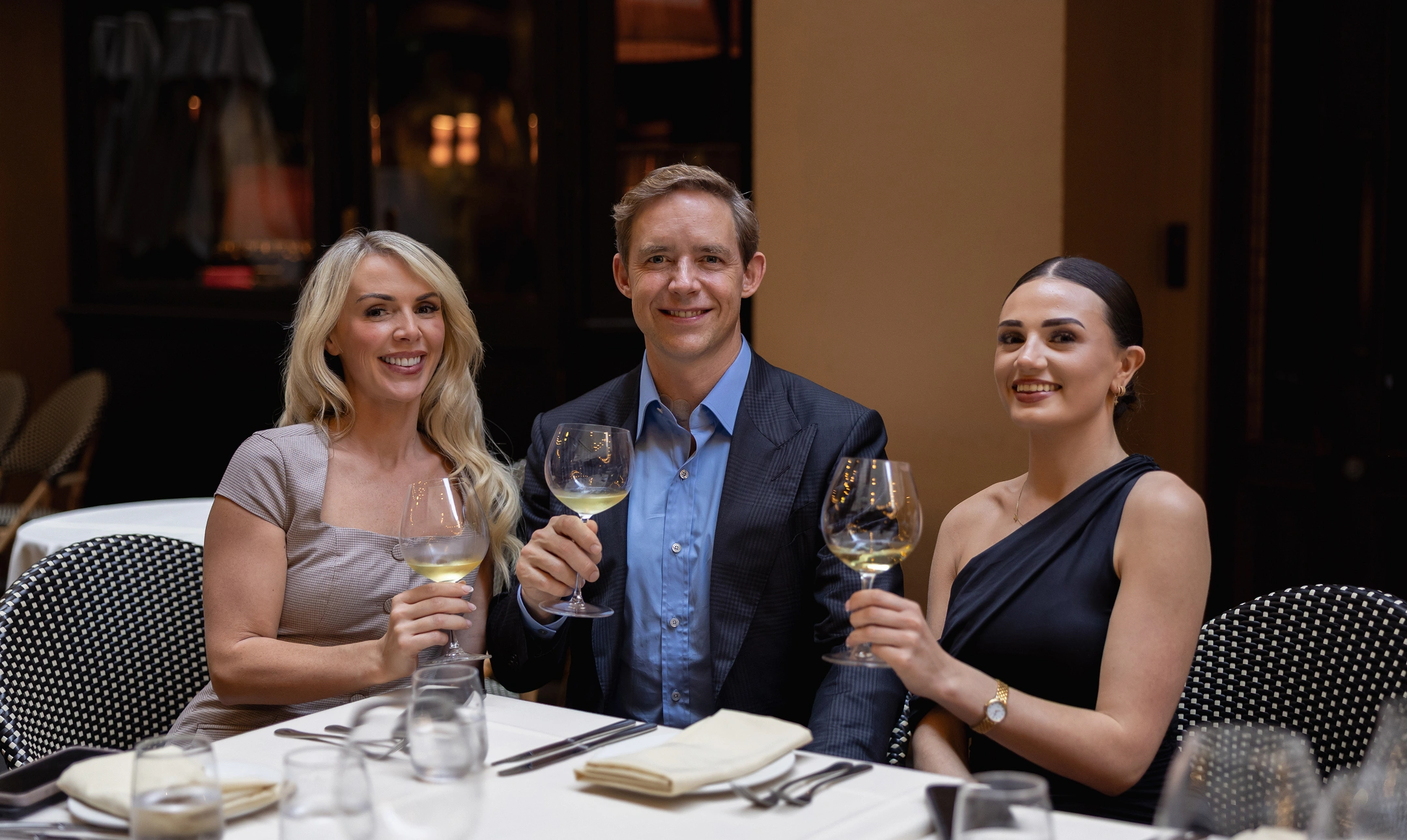
Flourishing Legacy
Some people invest in quarters. Matthew Hyder invests in decades.
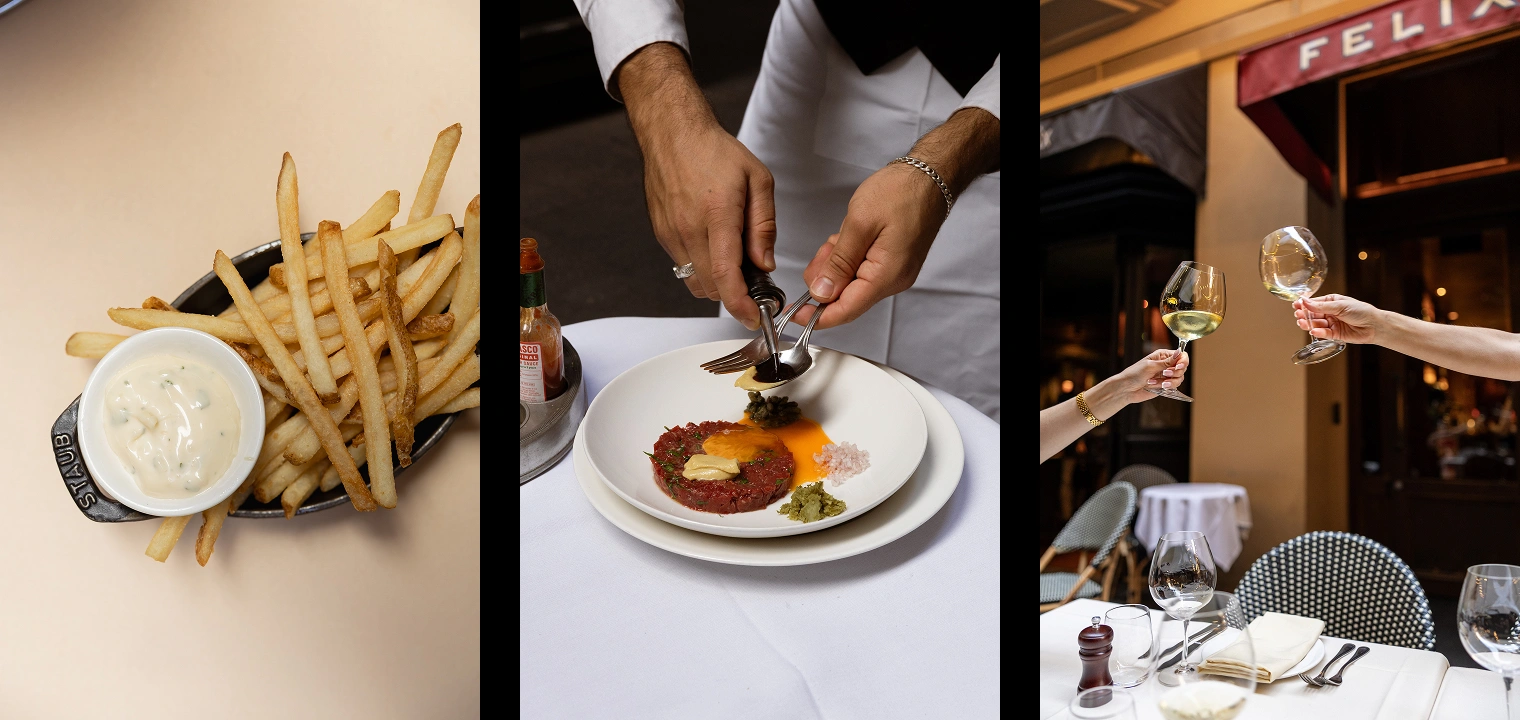
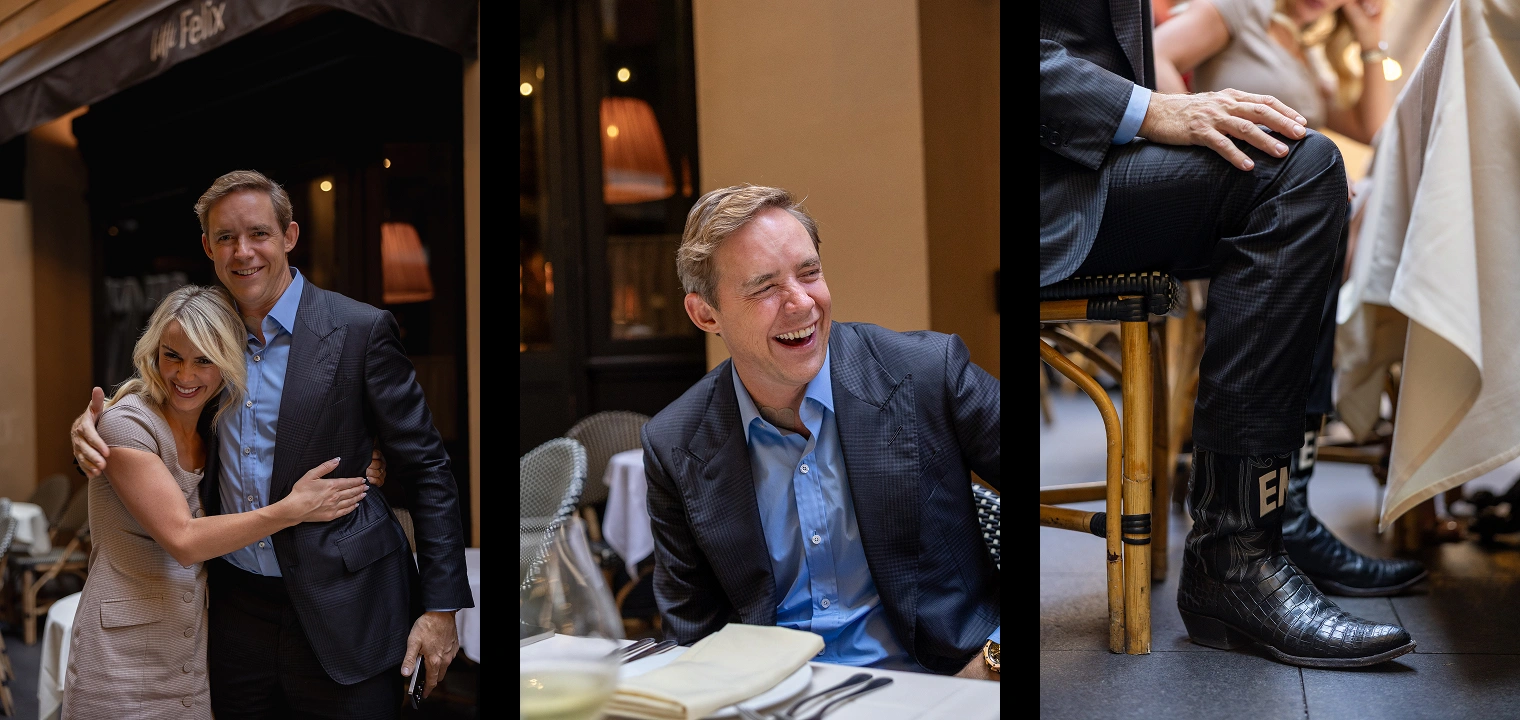
At Restaurant Felix on Ash Street, the late-afternoon Sydney light is catching the brass and the bentwood chairs, and Max the sommelier has just brought over a glass of white burgundy. The oysters are on the way. Felix is the kind of French brasserie that inspires a certain calm. Leather banquettes, white tiles, steak frites that everybody in the room eventually orders. Matthew, a regular, is explaining, without much inflection, why he chose to start a property development company in May of 2009.
“I was thirty,” he says. “I'd always had it as my goal to go into business for myself when I turned thirty.”
What he doesn't dwell on, because he doesn't really trade in drama, is that May 2009 was the bottom. The global financial crisis was still swallowing balance sheets whole. Plenty of developers were shutting their doors. Matthew was opening his.“
Looking back, couldn't have been a better time,” he shrugs. “There was almost all upside from there. We were able to go in and buy sites at pennies on the dollar. From '09 to call it '14, '15, '16, the market just rose every quarter. As a young company, you make mistakes. But because we bought so cheaply, and a market that was hungry for apartments kept arriving at our door, that growing revenue and that growing interest just washed over all those mistakes. Which was, frankly, very fortunate.”
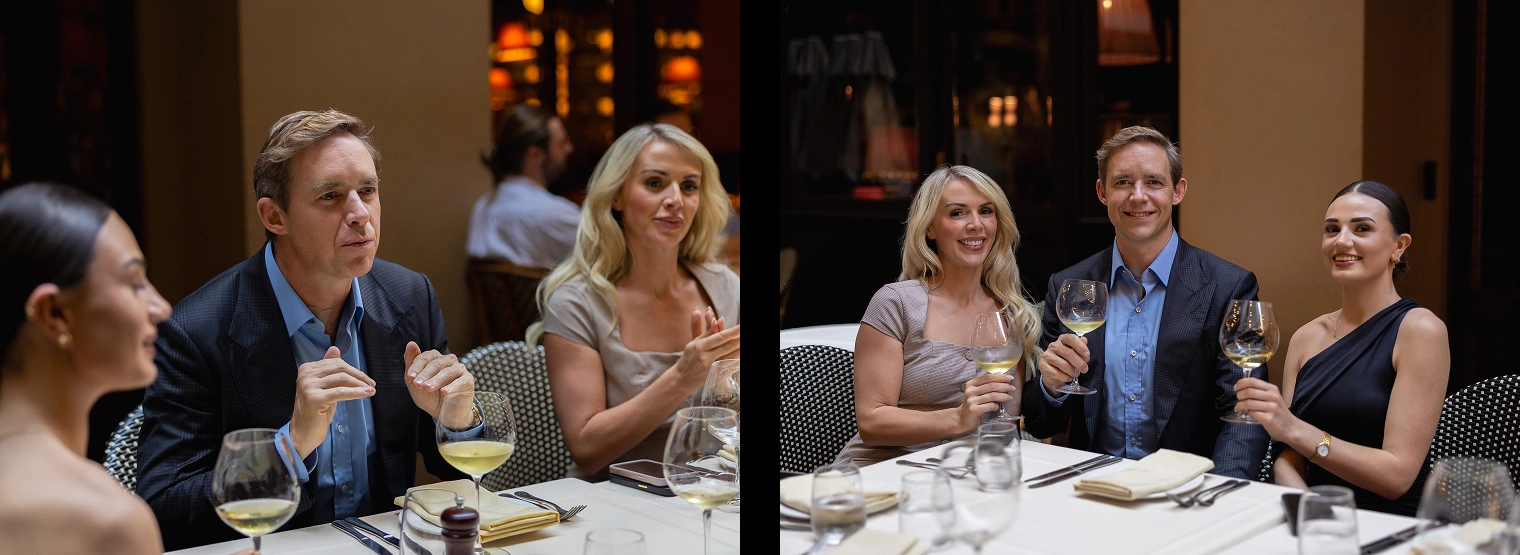
“Looking back, couldn't have been a better time. There was almost all upside from there.”
This is vintage Matthew. Deliver a vision-testing, balance-sheet-betting, timed-to-perfection call, and credit it to luck. The numbers tell a different story.
Legacy Property's first real project was a 104-apartment, ten-storey tower in North Sydney. Before that, the true first project was a three-lot subdivision of a single house in Manly Vale, funded with $250,000 raised from a mate. Seventeen years later, Legacy has just under 5,000 apartments and lots under development across eleven projects. At Orchard Hills alone, the company has sold 485 lots in under two years, a site Matthew assembled by acquiring $628 million of land from twenty-eight separate landowners, starting back in 2017.
The numbers underneath are the ones he quotes quietly, matter-of-fact, as if reading a weather report. Legacy's average annual rate of return for investors, across seventeen years: 21.9 percent per year. The worst return the company has ever provided an investor: 9.5 percent per year.
“I'm proud of it,” he says.
“Our average annual rate of return is 21.9% per year for investors, over seventeen years. Our worst deal was 9.5%.”
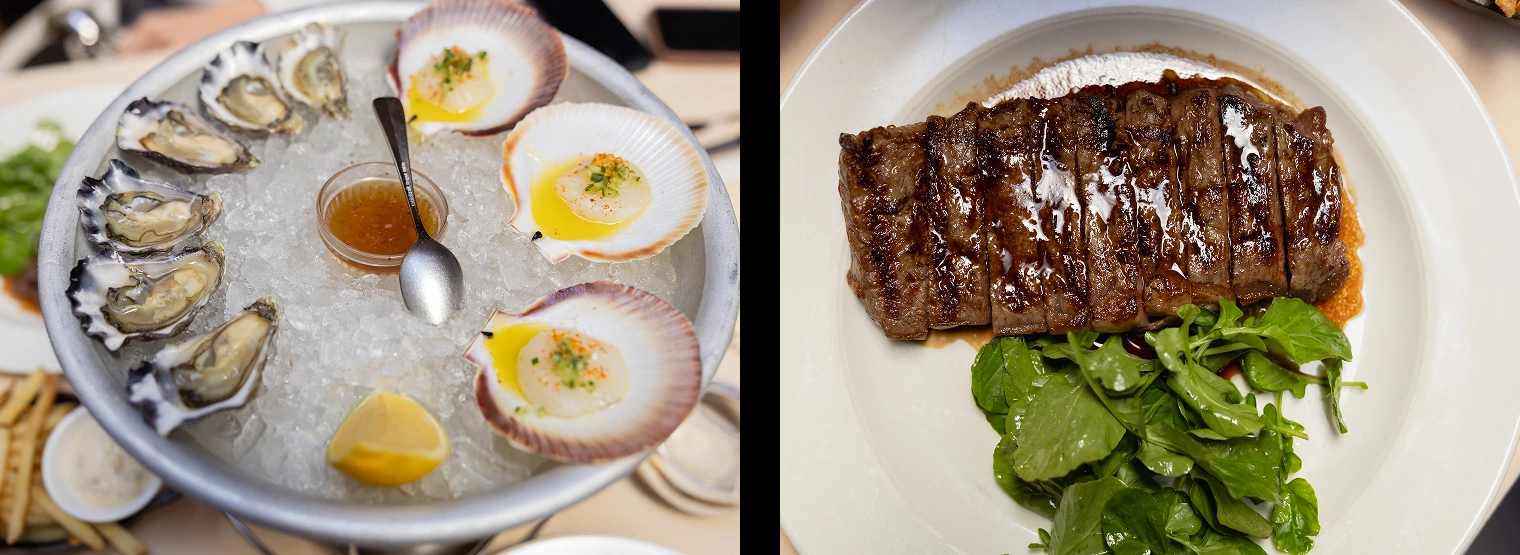
The oysters arrive. A small visual note: the well-cut suit ends in a pair of custom-made cowboy boots. It's a through-line Matthew has never tried to hide. He grew up in the US. Texas, where, as he puts it, “the smartest guys I saw in business in the nineties” were running hedge funds. He came to Australia via Macquarie Bank's Medalist Developments, the group behind projects like The Vintage in the Hunter Valley. The model there was residential communities around golf courses. “Great model in the US,” he says. “A little hard to do it in Australia.” After Macquarie he went back to Texas for four years to learn the apartment development business, then returned to Sydney in February 2009. He kicked off Legacy three months later.
“I've only ever done property development,” he says. “It was the goal. I really enjoy property. I enjoy the relationship side of it. I enjoy the fact that it's a tangible asset.”
Tangible is the word that keeps surfacing. He thought hard about hedge funds. Those were the guys he looked up to. But he chose property because it's a thing. It takes up space. It houses families. “It's also the most intellectual,” He adds, “within property, property development is the highest return, highest risk. It's also the most intellectual.”
“I enjoy property. I enjoy the relationship side of it. I enjoy the fact that it’s a tangible asset.”
Legacy isn't the only business. In 2017, Matthew launched Stirling Property Funds, a fund manager that acquires existing commercial buildings, industrial warehouses and shopping centres up and down Australia's east coast, looking for mispricings, adding value, returning income quarterly. Seven funds. Two hundred and eighty million dollars under management. “Our average return exceeds forecast across all the funds. None has lost money.”
Then there's Court House Capital, co-founded with one of his closest mates, Matthew Hourn. CHC is a litigation funder, backing plaintiffs in cases they believe have merit. The first fund returned investors 18 percent per annum over three years, about 1.63x their money. The second and third funds are on track to provide investors with 20% per annum and 30% per annum returns.
Three businesses, three asset classes, one unifying instinct: find mispricings, apply discipline, compound.It's somewhere between the oysters and the steak frites, though, that Matthew says something that reframes the whole conversation.
“What I'm really excited about right now is this flourishing initiative.”
It's a Harvard framework that measures the degree to which individuals are flourishing across six dimensions: social, financial, health, wellness, purpose and safety. Matthew has rolled it out across his thirty-eight staff, spread over the three companies, who are surveyed twice a year.
“It's not just simply how great of an employee are they, are they doing their tasks well,” he says. “It's — do they feel looked after? Do they feel they have purpose? Do they feel socially connected? Do they feel healthy?”
“Do they feel looked after? Do they feel like they have purpose? Do they feel socially connected? Do they feel healthy?”
The results prompted real action. The team wanted more time together in the office, so Matthew spun up a social committee. Staff wanted to be healthier but didn't know where to start, so he brought in a doctor to order blood work, a nutritionist twice a week, and ran a ten-week fitness challenge with weekly winners. They wanted financial advice, how to grow and protect what they'd earned, so wealth managers came in to educate.
“It's been fantastic,” he says. “It's the most exciting thing I'm working on right now.”
This, it turns out, is not separate from the rest of his life. Matthew has become, quietly, a serious student of longevity.
“In keeping with that flourishing theme, the people I'm most reading about and listening to podcasts on are health and wellness experts,” he says. "I love business. I love reading business. I've loved that for so long. But we're right now in this really interesting frontier. A lot is happening in that space.” He names names. David Sinclair. Peter Attia. A longevity doctor named Hugh Leslie in Melbourne. His GP, Judith Saw. “It’s about reading the evolving availability of information, consulting to them, assimilating information, and deciding which is right.”
The glass of Châteauneuf-du-Pape arrives, on Max's recommendation. Matthew confesses to his latest acquisition: a hyperbaric oxygen chamber. He wanted a hard-shell unit for the office but couldn't get building sign-off for a thousand-kilogram piece of equipment on the floor, so he ordered an extra-large flexible chamber from the US which inflates to 1.5 ATM and has a chair and desk inside.
“I use it every day. Sometimes twice a day,” he says. “The idea is that when you breathe enriched, oxygenated air under pressure, it maximises the absorption and significantly improves muscle recovery, injury recovery, and most importantly, brain health.”
The steak frites arrives, Matthew's standing order here. And the conversation turns to what it actually means, for a man with a small army already running his days, to join a community like Unobtanium. Matthew is candid about his starting position. He's fully serviced: EA, office manager, housekeepers, the usual architecture of someone who's been running three companies for seventeen years. When he first joined, he wasn't sure how he'd use it.
“For a while I was like, how useful is this actually going to be?” he admits. “I've got systems. I can get most things done.”
Then came the Taylor Swift concert.
“The ability to get things done that my team couldn't — that was super impressive,” he says. “Other members might also be fully serviced. But there are still things you want to get done that even the best of assistants can't do.”
“There are still things you want to get done that even the best of assistants can’t.”
This, he'd come to realise, is the whole point. An internal team, even an excellent one, has a reach that ends somewhere. An EA, however capable, eventually hits a wall. A personal network of “INs,” as he calls them, only goes so far. What changes the equation is having a dedicated outfit on the other end of the phone whose actual job is to close the gap between what's meant to be impossible and what, with the right call, isn't.
“That's what I'd say to a potential member,” he adds. “Day in, day out, week on, week off — being able to get me to the places I want to go when I do want to go. It's a great thing, and it's not easily done.”
There's a second piece too, and it's the part that surprised him most: the fun of it. The collaboration. The fact that the ideas themselves are part of the service.“It's the fun element — coming up with ideas,” he says. A restaurant he hadn't heard of. A trip he hadn't considered. A party concept he wouldn't have dreamed up alone. “You always seem to be available, and all these things really adds a lot.”
Ask him about places and the answers come back specific. His one non-negotiable annual pilgrimage is Aspen. He's been going since he was, in his words, “a little powder panda.” Four mountains, from easy terrain to proper expert terrain, actual culture and arts in town, friends who return every year. “That's definitely one of my favourite places,” he says. “An annual.”
Then there's Montana. The dude ranches at Paws Up and The Ranch at Rock Creek. “Honestly, some of the most expensive places we go — but amazing places, in terms of so many incredible activities. They have every single thing you can possibly do outdoors. Yet they look after you in the most luxurious way. Excellent food, amazing lodging.” And Capri, which he loves more than its flashier Amalfi neighbours. “You get a lot of people coming in the daytime on yachts and cruise ships, but they all leave late afternoon. Then the place is just this really beautiful little thing. So many restaurants and cafes and bars and shops. I don't know. I really, really enjoy Capri.”
Closer to home, Hobart took him by surprise. He went with this golf mates the year before last and this year took the team down for their biennial corporate retreat. “Mona was exceptional. The wineries like Pooleys and Tolpuddle right outside of town. Great golf courses. The food was amazing. We went to this restaurant called Landscape — one of the best meals I've had in Australia. Exceptional, beautiful, I was blown away.”
Lord Howe Island, the Northern Territory, crocodile safaris. Matthew is surprisingly bullish on Australia right now. “I think it's elevating its game. There are some understated places that are really nice.”
“There are some understated places that are really nice. We should be looking inside.”
The raspberry soufflé arrives, Felix's signature, to be split with a mate at the next table. And as lunch winds down, the through-line becomes clear.
Matthew doesn't really trade in hot takes or big swings. He trades in compounding. Seventeen years of 21.9 percent annual returns at Legacy and solid performance for investors in Stirling and 6 years for Court House. A property pipeline that stretches another eight years out from today. A longevity practice measured not in months but in daily chamber sessions and twice-yearly staff surveys. An annual pilgrimage to Aspen that began in childhood and hasn't missed a year by choice. Three businesses, three asset classes, one life. All built one decade at a time.
The word he chose for his company was not, it turns out, an accident. Legacy. As in: the thing that outlasts you. The thing you're building for the people who come next.
What Matthew is really building, you realise, isn't a building. It's a compound, in every sense of the word. Returns that compound. Relationships that compound. Health that compounds. A team that flourishes over years, not quarters. A life designed to still be there, and still be good, thirty years from now.
“Legacy. As in: the thing that outlasts you. The thing you’re building for the people who come next.”
“It's been a great run,” he says, and you get the sense he means something much bigger than the last quarter.
Request a call with
Matthew Hyder

What we ordered
- Scallop Crudo
- Sydney Rock Oysters
- Steak Tartare
- Steak Frites
- Leaves
- Raspberry Soufflé (to share)
- Bernard Defaix - Chablis Premier Cru Côte de Léchet 2023 (selection courtesy of Max, Sommelier)